Bus Arrival
- 4.4
- Rating
- 100.00M
- Installs
- Free
- Price
 Analysis by App-foxy
Bus Arrival is a racing game with a deliberately simple idea: get the bus moving, keep your timing under control, and enjoy short bursts of play without having to learn a complicated vehicle system. After spending time with it, my main impression is that it works best as a light, immediately understandable game rather than as a serious driving simulator. It is easy to pick up, suitable for a quick break, and friendly enough for a broad audience, but players looking for realistic handling, deep car tuning, or a large competitive racing structure may outgrow it.
The game is developed by Sixcube and is free to download, with optional purchases ranging from $0.49 to $99.99 per item. That pricing matters because the basic attraction is accessibility: you can try the core experience without paying first. At the same time, anyone who dislikes games that place optional spending prominently in the progression loop should approach it with a little caution. My advice is to begin with a few short sessions, see whether the rhythm suits you, and only then decide whether the extra purchases are worthwhile.
Why the bus-focused racing idea works
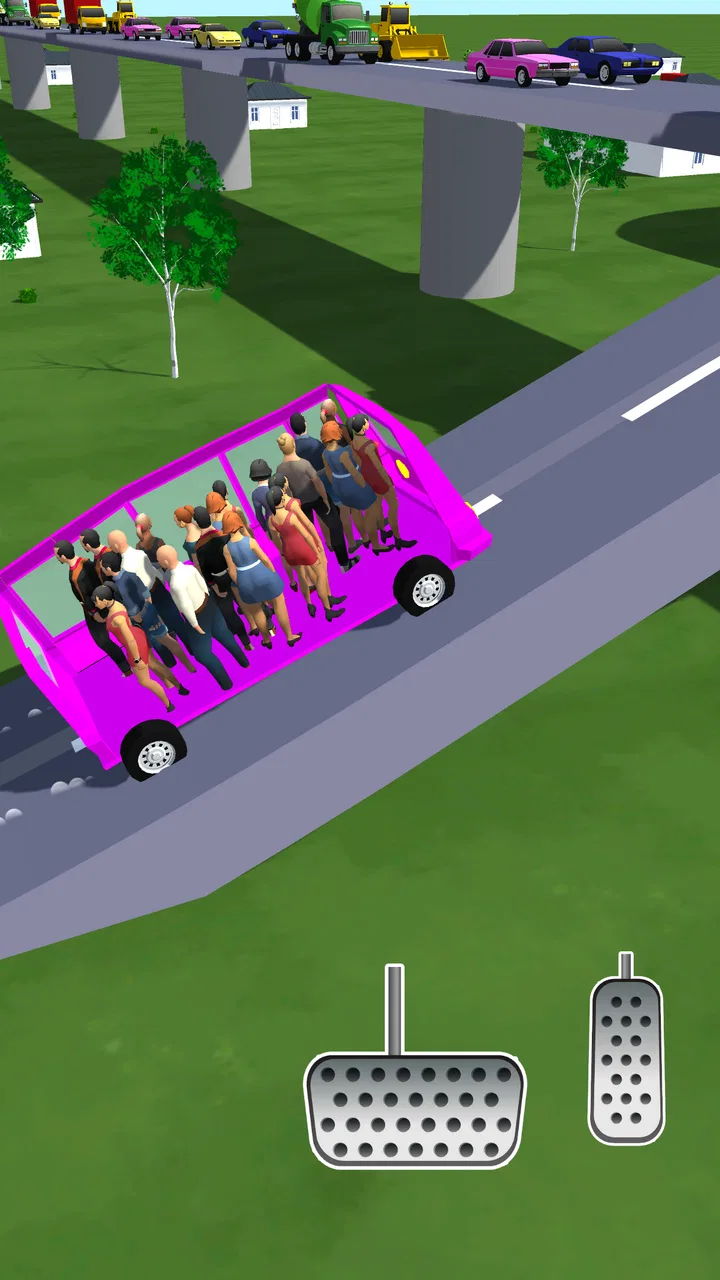
Most racing games put sports cars, motorcycles, or off-road vehicles at the center. Bus Arrival takes a different route. The bus gives the game a more unusual personality and changes the way I think about each run. Instead of expecting razor-sharp cornering and high-speed precision, I pay more attention to momentum, positioning, and the feeling of guiding a heavier vehicle through a compact challenge.
You May Also Like

 Pandora - Music & Podcasts
Pandora’s Music Is Easy to Start, but Harder to Recover
Pandora’s strength is its low-effort path from a seed to a station. Its weak spot is how much confidence it asks you to place in connection, setup, and quiet recovery.

 8 Ball Pool
 Is Built on Rivalries, Rematches, and Routine
A close look at the rivalries, rematches, shared routines, and unanswered safety questions that turn a quick pool match into a persistent mobile community.

 Samsung Music
’s Quiet Strength Is Playing What You Already Own
Its reach comes less from spectacle than from dependable access to a personal library. That simplicity is both the app’s strongest retention engine and its ceiling.

 AccuWeather: Weather Radar
AccuWeather Review: A Quick, Clear Forecast for Everyday Decisions
For everyday plans, the best forecast is the one you can understand quickly. AccuWeather makes rain timing, radar, and local conditions easy to act on, with a few trade-offs.

 Hill Climb Racing
Why Hill Climb Racing Still Turns Crashes Into One More Run
A tiny car, a bumpy hill and one more upgrade: Hill Climb Racing keeps resurfacing because its simple chaos makes every near-miss feel personal.

 AliExpress - Shopping App
AliExpress Makes Global Shopping Feel Personal, but Shoppers Bear the Risk
AliExpress turns a global marketplace into a pocket-sized discovery engine. Its reach is useful, its shopping loop compelling, and its trade-offs easy to miss.
More From Our News Desk
View All News


That difference is the strongest reason to try it. The concept is understandable within moments, which makes it a good choice when I want something I can open and play without studying a long tutorial. The store summary, “Bus Arrival! All aboard!”, captures the playful tone, but the actual appeal is less about the slogan and more about the compact loop: start a run, react to what is ahead, and try to make the next attempt cleaner than the last.
I also like that the premise gives the game a recognizable identity. There are countless mobile racing titles that can blur together because they use the same supercars and familiar speed-focused presentation. A bus immediately makes this one easier to remember. It is not trying to imitate a full console racing experience, and that is a sensible choice for a game built around quick, accessible play.
The controls are most enjoyable when I treat them as a timing exercise rather than a test of realistic driving skill. Small corrections tend to matter more than frantic movement. If I rush my inputs, the run feels less controlled; if I watch the road and make deliberate adjustments, the bus becomes easier to manage. That creates a useful beginner lesson: the game rewards patience more than simply pressing everything as quickly as possible.
For a new player, I would spend the first few attempts learning the pace instead of chasing a perfect result. Notice how much room the bus needs, identify where a correction usually becomes necessary, and avoid making several large movements in succession. This approach is more reliable than reacting at the last possible moment. It also makes the game feel less random, because improvement comes from recognizing patterns in your own decisions.
A good fit for short, everyday play
One realistic use case is a short wait before an appointment or while commuting as a passenger. I can imagine opening the game for a few minutes, completing a run or two, and putting it away without feeling that I have abandoned a long campaign. That convenience is a genuine strength. It does not demand the same commitment as a large racing game with lengthy events, extensive menus, and a garage that needs constant attention.
The same quality makes it suitable for younger players and casual players who are not normally interested in racing. Its content rating is Everyone, and the straightforward bus theme feels less intimidating than a game built around aggressive competition or complicated vehicle statistics. Adults who want a calm distraction can also find value here, especially if they enjoy repeating a small challenge until their timing improves.
Still, “easy to start” should not be confused with “deep for everyone.” The game’s appeal depends heavily on whether the player enjoys repetition and gradual improvement. If you need a strong story, a detailed career mode, or frequent surprises, the simple structure may begin to feel narrow. I would recommend it more confidently to someone who likes bite-sized arcade challenges than to someone shopping for a complete racing hobby.
What I learned from playing more carefully
The first non-obvious lesson is that the best runs usually come from preparing for the next movement, not merely surviving the current one. With a bus, a correction can have consequences a moment later. I found it more effective to leave enough space for adjustment than to hug every edge or aim for the most aggressive line. That is a small strategic change, but it makes the game feel much more manageable.
A second useful tip is to separate experimentation from score chasing. On early attempts, I deliberately tried different approaches even when I suspected they would fail. That helped me understand how much control I really had and where my reactions were too late. Once I had a better feel for the movement, I switched to conservative runs. This two-stage method is more productive than restarting immediately after every mistake.
A third trade-off is the relationship between speed and control. Faster play can feel exciting, but it also reduces the time available to correct a poor position. When I focused only on moving quickly, I made more avoidable errors. When I accepted a slightly slower, more measured rhythm, I had better control. Players who want a constant adrenaline rush may find that restrained style less satisfying, while players who enjoy precision will probably appreciate it.
I would also suggest playing with a clear goal for each session. One attempt can be about understanding the route, another about reducing careless corrections, and another about finishing consistently. This prevents the game from becoming a vague cycle of repeating the same action. It turns short sessions into small practice exercises, which is where the strongest sense of progress comes from.
Where the experience loses momentum
The main weakness is that the simple concept can limit long-term variety. A bus is a memorable central idea, but it cannot by itself provide the depth of a broad racing catalogue. After the novelty wears off, the quality of the experience depends on how much the player enjoys the underlying repetition. I found the early accessibility appealing, yet I can also see why a dedicated racing fan might eventually want more vehicle choice, more demanding events, or a richer sense of progression.
This is not a criticism of the game for failing to be something else. It is a question of expectations. Compared with a full racing simulator, Bus Arrival is lighter and less technical. Compared with a large arcade racer, it may feel more focused and less expansive. Compared with an endless runner, its bus-centered handling gives it more character, but players who prefer constant novelty may find the repeated structure less compelling.
The free-to-play model is another point worth considering. The ability to start without paying is convenient, particularly for families or anyone testing an unfamiliar title. However, optional purchases can change how comfortable the experience feels depending on the player’s tolerance for monetization. The available purchase range runs from $0.49 to $99.99 per item, so I would not hand the game to a child without checking the device’s purchase protections first. That is practical advice, not a judgment on the game itself.
The game runs on Android 7.0 or later, which makes it accessible to many older devices, but compatibility alone does not guarantee that every phone will feel equally comfortable. Screen size, touch response, and general device performance can affect how easy it is to make precise corrections. If the controls feel awkward on a smaller screen, I would try changing how I hold the phone before deciding that the game is not for me. A little extra viewing space can make timing-based play less frustrating.
Another limitation is the possibility of fatigue. A short session is enjoyable because the idea is clear and the objective is immediate. A long session can expose the narrowness of that same design. I would treat it as a game to revisit in small doses rather than something I need to play continuously for an entire evening. That usage pattern suits its strengths and avoids asking it to provide depth it was not designed to deliver.
How it compares with familiar racing choices
If your usual mobile racing game is built around licensed-looking cars, elaborate upgrades, and a large collection of events, this will feel much more modest. Those alternatives are better when you want a garage to manage, a longer progression path, and a stronger sense of owning a racing career. They also tend to reward players who enjoy learning detailed vehicle differences and planning longer sessions.
Bus Arrival is better when the decision to play needs to be almost instant. I do not need to commit to a lengthy event or remember a complicated setup. The bus theme also gives it a more playful identity than a generic car racer. In exchange, I accept a smaller-feeling experience and less reason to compare technical vehicle performance.
Against arcade racers, the comparison is closer. Arcade titles often emphasize speed, spectacle, and constant action, while this game’s charm comes from controlling an unusual vehicle and making sensible adjustments. If I want a bright, energetic rush, another arcade racer may be the better choice. If I want a slower, more deliberate challenge that still fits into a short break, Bus Arrival has the stronger case.
It also differs from realistic driving games in a fundamental way. A simulator is the right option for someone interested in traffic rules, authentic vehicle behavior, or detailed road systems. This is not where I would send a player seeking that kind of learning. Its value is entertainment through simplified control, not practical driver training.
Who should install it
I would recommend it to casual players who enjoy quick racing challenges, younger users who want an approachable game, and anyone amused by the idea of putting a bus at the center of a racing experience. It is especially suitable for people who prefer learning through repeated attempts rather than reading instructions. The game’s broad age rating supports that accessible feel, and its free entry point makes trying it straightforward.
It is also a good option for players with limited time. I can play a few attempts while waiting, stop without losing an entire evening, and return later with a clearer idea of what I want to improve. That kind of flexible session design is more useful than it may sound. Many mobile games become chores because they demand daily maintenance; this one is easier to treat as an occasional pastime.
I would skip it if your priority is realistic driving, online competition, extensive customization, or a deep single-player campaign. I would also be cautious if repeated attempts without major changes quickly bore you. In those cases, a conventional racing game with broader events or a simulator with more detailed controls will probably offer better value for your attention.
The game has built a substantial audience, with an average rating of 4.5 from around 314 thousand ratings and more than 50 million installs. Those figures suggest that its straightforward concept has reached many players, but they should not replace personal judgment. Popularity cannot tell me whether I will enjoy the control style, and the rating cannot remove the monetization or repetition concerns. The best test remains a few free sessions played with realistic expectations.
Practical details before you begin
Bus Arrival first appeared on May 26, 2022, and the current version is 3.9.9. I would keep the game updated through the normal app store process, particularly if an older installation behaves unexpectedly. The developer is Sixcube, and the title is available as a free game rather than a paid download, with optional in-app purchases.
Before playing, I would decide whether I am comfortable with optional spending and set device-level purchase controls where appropriate. This is especially important on a shared phone or tablet. The low starting price of some items may seem harmless, but the upper end of the purchase range is much higher, so a clear boundary is sensible.
I would also approach the first session as a calibration period. Do not judge the game after one rushed attempt. Learn the bus’s movement, make smaller corrections, and notice whether the basic rhythm is enjoyable. If that rhythm feels satisfying, the game can become a pleasant little routine. If it already feels repetitive, more play is unlikely to transform it into a different kind of racer.
My final recommendation
Bus Arrival succeeds because it chooses a clear, unusual premise and keeps the entry barrier low. I like its bus-centered identity, its suitability for short sessions, and the way careful timing matters more than memorizing a complicated system. It is a friendly racing game for casual play, and the free download gives curious players a sensible way to test it.
Its limits are equally clear. The focused design may not hold the attention of serious racing enthusiasts, repetition can become noticeable, and optional purchases deserve sensible safeguards. I would not present it as a replacement for a simulator or a feature-heavy arcade racer. I would present it as a compact, approachable alternative for moments when I want a quick challenge with a distinctive vehicle.
My verdict: install it if you want simple bus-based racing in short bursts, but skip it if depth, realism, or constant variety matters more than immediate accessibility. For the right player, that narrow focus is not a flaw; it is exactly what makes the game easy to understand and enjoyable to revisit.
FAQs for Bus Arrival
01What features does the Bus Arrival app offer?
The Bus Arrival app provides real-time tracking of buses, allowing users to view estimated arrival times and plan their journeys effectively. It also includes route maps, notifications for delays, and the ability to save favorite routes for quick access. Users can customize alerts for specific stops and times.
02How accurate is the real-time tracking on Bus Arrival?
The app utilizes GPS technology to provide precise real-time tracking. However, accuracy can depend on factors like signal strength and network connectivity. Generally, users find the estimates to be highly reliable, but occasional discrepancies can occur, especially in areas with poor reception or heavy traffic conditions.
03Is the Bus Arrival app available for both Android and iOS?
Yes, the Bus Arrival app is available for download on both Android and iOS platforms. Users can find it on the Google Play Store and the Apple App Store. Ensure your device meets the minimum operating system requirements to enjoy a seamless experience with the app.
04Are there any subscription fees or in-app purchases?
The app is free to download and use for basic features such as viewing routes and real-time tracking. However, there might be optional in-app purchases or subscription plans that offer additional features like ad removal, advanced notifications, or premium customer support.
05How does the app handle user privacy and data security?
Bus Arrival takes user privacy seriously, implementing strict data protection measures. The app collects minimal personal information necessary for functionality, and any data collected is used solely to enhance user experience. It complies with relevant privacy laws and offers users the ability to manage their data preferences within the app settings.
Pros
- Real-time bus tracking is highly accurate.
- Easy-to-use interface for all ages.
- Customizable notifications for arrivals.
- Low data usage
- perfect for limited plans.
- Supports multiple cities and routes.
Cons
- Occasional bugs cause app to crash.
- Limited offline functionality.
- Ads can be intrusive at times.
- Some smaller cities not covered.
- Frequent updates required for stability.

Bus Arrival
Gallery